
What Is ABA Therapy? 5 Powerful Benefits Explained
What Is ABA Therapy and How Does It Help Children Thrive?
Parents often begin searching for answers when they notice their child experiencing challenges with communication, social interaction, learning, or daily routines. One of the most common questions families ask is: What is ABA therapy ?
Understanding what ABA therapy is can help parents make informed decisions about behavioral support services. Applied Behavior Analysis (ABA) is one of the most researched and widely used behavioral interventions for children with autism spectrum disorder and other developmental challenges. It focuses on teaching meaningful skills while reducing behaviors that may interfere with learning and everyday life.
At Thrive Behavior Centers, families frequently ask what ABA therapy is and whether it can help their child reach important developmental milestones. The answer depends on each child’s unique needs, goals, and strengths. ABA is highly individualized and designed to help children learn in ways that are effective, measurable, and supportive.
Understanding What ABA Therapy is
When discussing what ABA therapy is, it is important to understand the foundation behind the approach.
Applied Behavior Analysis is a scientific method that studies how behavior is influenced by the environment. ABA professionals observe behaviors, identify patterns, and create strategies that encourage positive skill development. The therapy is built on evidence-based principles of learning and behavior.
The goal of ABA is not to change who a child is. Instead, it helps children develop practical skills that can improve communication, independence, social interactions, and daily functioning.
Research has consistently shown that ABA can support meaningful progress in communication, language development, social engagement, and adaptive skills when programs are individualized and implemented appropriately (Centers for Disease Control and Prevention [CDC], 2024). According to the CDC, behavioral approaches such as ABA have some of the strongest evidence supporting skill development for individuals with autism spectrum disorder. (CDC, 2024).
Parents exploring what ABA therapy is often discover that it is not a single technique. Rather, it is a collection of evidence-based strategies tailored to a child’s specific goals and needs.
The History and Science Behind ABA
To better understand what ABA therapy is, it helps to look at its origins.
ABA therapy emerged from decades of research in learning theory and behavioral science. Researchers studied how reinforcement, environmental factors, and teaching methods influence behavior. Over time, these findings were applied to educational and therapeutic settings.
Modern ABA therapy has evolved significantly over the years. Today’s programs focus on teaching functional skills, encouraging communication, supporting independence, and helping children participate more fully in family, school, and community life.
According to the Cleveland Clinic, ABA therapy uses positive reinforcement to encourage desired behaviors and support learning. Positive reinforcement means rewarding behaviors that are helpful or beneficial, increasing the likelihood that those behaviors will occur again (Cleveland Clinic, 2023).
What Skills Can ABA Therapy Develop?
One of the most important aspects of understanding ABA therapy is recognizing the wide variety of skills it can address.
ABA programs may help children develop:
- Communication skills
- Language development
- Social interaction abilities
- Play skills
- Self-care routines
- Academic readiness
- Attention and focus
- Emotional regulation
- Problem-solving skills
- Daily living independence
Every child receives an individualized treatment plan based on their strengths and goals. Some children may focus on improving communication, while others may work on social engagement, self-help skills, or behavioral flexibility.
ABA therapy is highly personalized, so goals are developed collaboratively among behavior analysts, parents, caregivers, and other professionals involved in the child’s care.
What Happens During an ABA Therapy Session?
Parents researching what ABA therapy is often want to know what sessions actually look like.
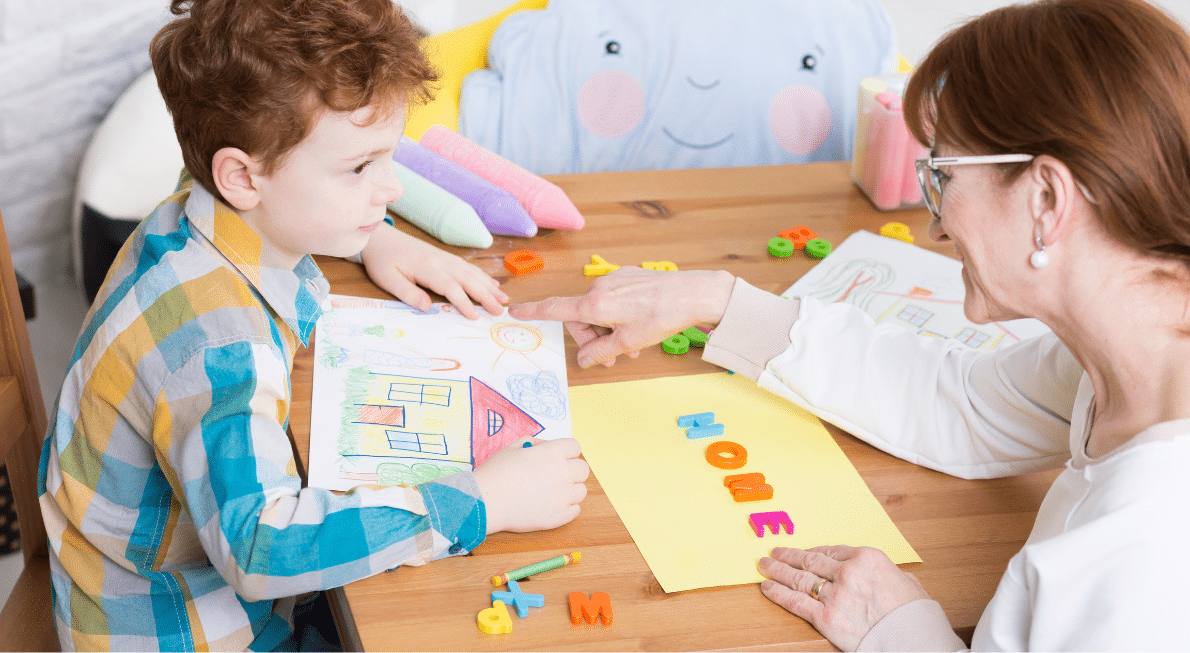
A typical ABA therapy session may include structured teaching opportunities, play-based learning, social interactions, and real-life skill practice. Therapists create engaging activities that motivate children while teaching targeted skills.
For example, a therapist might:
- Teach requesting skills through play
- Practice conversation skills
- Encourage turn-taking during games
- Reinforce following directions
- Develop self-help routines
- Build independence with daily tasks
Modern ABA therapy frequently incorporates naturalistic teaching methods that allow children to learn skills in everyday situations. These approaches help children generalize newly learned skills across different environments and people.
Thrive Behavior Centers offers ABA therapy programs both in-clinic and at-home.
Key Principles of ABA Therapy
Understanding the core principles helps answer the question: What is ABA therapy ?
Several foundational concepts guide ABA interventions.
Positive Reinforcement
Positive reinforcement involves rewarding desired behaviors. When children receive meaningful reinforcement after demonstrating a skill, they are more likely to repeat that behavior.
Data Collection
ABA programs rely heavily on objective data. Therapists track progress continuously to ensure interventions are effective and goals are being achieved.
Individualization
No two ABA programs are identical. Treatment plans are customized to address each child’s unique strengths, challenges, and developmental needs.
Skill Generalization
Children learn how to apply skills across multiple environments, including home, school, and community settings.
Ongoing Assessment
Behavior analysts regularly review data and modify strategies to ensure progress continues.
These principles help explain why many professionals consider ABA a structured and measurable intervention approach.
Benefits Families Often Experience Through ABA
Many parents asking what ABA therapy is are primarily interested in outcomes.
While every child’s progress varies, families often report improvements in several areas:
Improved Communication
Many children learn new ways to express their wants, needs, thoughts, and feelings.
Enhanced Social Skills
ABA therapy can help children engage more successfully with peers, family members, and teachers.
Increased Independence
Children often develop self-help skills such as dressing, toileting, feeding, and personal hygiene.
Better Learning Readiness
Improved attention, following directions, and task completion can support educational success.
Reduced Challenging Behaviors
Behavior analysts identify the reasons behind behaviors and teach alternative skills that serve the same purpose.
Greater Family Confidence
Parents often gain practical strategies they can use to support their child’s development at home.
Who Can Benefit from ABA Therapy?
Although ABA is frequently associated with autism spectrum disorder, it can support individuals with a variety of developmental and behavioral needs.
Children who may benefit include those experiencing challenges with:
- Communication
- Social interaction
- Learning readiness
- Daily living skills
- Emotional regulation
- Attention and focus
- Behavioral concerns
Many families first learn what ABA therapy is after receiving an autism diagnosis. The American Academy of Pediatrics cites research that indicates that many evidence-based intervention models for autism are grounded in ABA principles and focus on improving socially meaningful behaviors and developmental outcomes (Hyman et al., 2020). However, ABA principles can also be applied across educational, developmental, and behavioral settings.
The therapy is most effective when goals are individualized and aligned with the child’s unique developmental profile.
Common ABA Therapy Approaches
Families researching what ABA therapy is often discover several different teaching models.
These may include:
Discrete Trial Training (DTT)
DTT uses structured, step-by-step instructions to teach specific skills.
Natural Environment Teaching (NET)
NET teaches skills during naturally occurring activities and everyday experiences.
Pivotal Response Training (PRT)
PRT focuses on pivotal developmental areas such as motivation and communication.
Early Intensive Behavioral Intervention (EIBI)
EIBI provides intensive individualized services for young children.
The CDC identifies DTT and PRT among the commonly used ABA-based approaches that help children develop important skills across multiple domains (CDC, 2024).
Parent Involvement in ABA Therapy
Recognizing the role parents play in the process is a critical component to understanding what ABA therapy is.
Parent involvement is often a major factor in successful outcomes.
Behavior analysts frequently provide caregiver training that helps families:
- Reinforce skills at home
- Support communication development
- Encourage independence
- Manage challenging situations
- Create consistent learning opportunities
When parents actively participate, children often have more opportunities to practice skills throughout the day.
At Thrive Behavior Centers, family collaboration remains an essential part of delivering meaningful and sustainable progress.
Choosing an ABA Provider
When exploring ABA therapy, families should also consider how to select a provider.
Important factors may include:
- Board Certified Behavior Analysts (BCBAs) on staff
- Individualized treatment planning
- Family involvement opportunities
- Data-driven decision-making
- Transparent communication
- Ethical and compassionate care practices
Families should feel comfortable asking questions about treatment approaches, progress monitoring, and therapy goals.
A quality ABA provider focuses on building meaningful skills that improve the quality of life for the child and family.
Why Families Continue Asking “What Is ABA Therapy ?”
The growing interest in what ABA therapy is reflects parents’ desire to find evidence-based support for their children.
ABA therapy remains one of the most extensively researched behavioral interventions available today. Its emphasis on measurable outcomes, individualized treatment, and practical skill development continues to make it a widely utilized option for families seeking support.
By focusing on communication, social interaction, independence, and daily living skills, ABA therapy helps children build skills and abilities that can positively impact many aspects of life.
Families who understand what ABA therapy is are often better equipped to make informed decisions regarding services, interventions, and long-term developmental goals.
At Thrive Behavior Centers, helping families understand what ABA therapy is is the first step toward creating individualized pathways that support growth, confidence, and success for every child.
References
- Centers for Disease Control and Prevention. (2024, May 16). Treatment and intervention for autism spectrum disorder. https://www.cdc.gov/autism/treatment/index.html
- Cleveland Clinic. (2023, August 16). Applied behavior analysis (ABA). https://my.clevelandclinic.org/health/treatments/25197-applied-behavior-analysis
- Hyman, S. L., Levy, S. E., Myers, S. M., & Council on Children with Disabilities. (2020). Identification, evaluation, and management of children with autism spectrum disorder. Pediatrics, 145(1). https://publications.aap.org/pediatrics/article/145/1/e20193447/36917/Identification-Evaluation-and-Management-of
- National Institute of Child Health and Human Development. (2025). Behavioral management therapy for autism. https://www.nichd.nih.gov/health/topics/autism/conditioninfo/treatments/behavioral-management
- Autism Speaks. (2025). Applied behavior analysis (ABA). https://www.autismspeaks.org/applied-behavior-analysis