
5 Proven Secrets of Positive Reinforcement for Autism
Introduction to Positive Reinforcement for Autism
At Thrive Behavior Centers, the mission of ABA 101 is simple yet powerful: to make behavior analytic knowledge accessible, engaging, and easy to understand for parents, teachers, and non-behavioral professionals. One of the most essential and widely used principles in Applied Behavior Analysis (ABA) is positive reinforcement for autism.
Understanding positive reinforcement for autism equips caregivers and educators with practical tools to teach new skills, strengthen communication, and reduce challenging behaviors ethically and effectively. Rooted in decades of research and clinical application, positive reinforcement for autism forms the backbone of evidence-based ABA therapy programs.
In this comprehensive ABA 101 guide, we will explore:
-
The meaning of positive reinforcement.
-
What reinforcers are and how they function
-
The ABC Model (3-term contingency)
-
Characteristics of effective reinforcement
-
Real-life applications for parents and teachers
-
A knowledge check to test your understanding
By the end, you will feel confident applying positive reinforcement in daily interactions.
What Is Positive Reinforcement for Autism?
Defining Positive Reinforcement for Autism
Positive reinforcement for autism refers to presenting a desirable stimulus immediately following a behavior, which increases the likelihood that the behavior will occur again in the future under similar conditions.
Let’s break that down:
-
Positive = adding something
-
Reinforcement = increasing behavior
-
For autism = applied intentionally to support individuals with autism spectrum disorder (ASD)
When using positive reinforcement, the consequence must be contingent on the behavior. That means the behavior directly results in the consequence. If the consequence increases future behavior, it functions as a reinforcer.
B.F. Skinner’s foundational research on operant conditioning established reinforcement as a primary mechanism of behavior change (Skinner, 1953). Later, applied research demonstrated that positive reinforcement is the most widely used and effective principle in behavior analysis (Cooper et al., 2019).
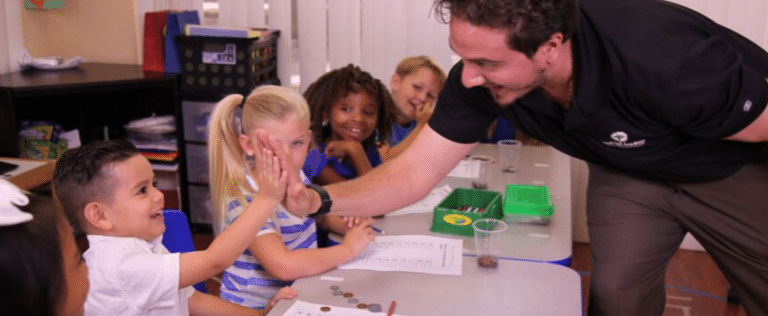
In practice, positive reinforcement may include praise, preferred activities, tokens, edibles, or social interaction delivered immediately after a desired behavior.
Reinforcers in Positive Reinforcement for Autism
What Is a Reinforcer?
A reinforcer is any stimulus that increases the future likelihood of a behavior. Not all rewards are reinforcers. In positive reinforcement for autism, the stimulus must actually strengthen behavior.
For example:
A teacher asks, “What is 5 + 2?”
Sally raises her hand and says, “7.”
The teacher responds, “Great job! You’re right!”
If Sally raises her hand more often in the future, praise functioned as a reinforcer.
However, if Sally receives candy she dislikes instead of praise and raises her hand less often, the candy was not a reinforcer. This distinction is critical in positive reinforcement.
According to Cooper et al. (2019), reinforcement is defined by its effect on behavior, not by intention.
Types of Reinforcers in Positive Reinforcement for Autism
Positive reinforcement for autism may involve:
-
Social reinforcers (praise, smiles, attention)
-
Tangible reinforcers (toys, tokens, stickers)
-
Edible reinforcers (snacks, candy)
-
Activity reinforcers (screen time, games, outdoor play)
In autism intervention, individualized preference assessments are often used to identify effective reinforcers (Fisher et al., 1992).
Understanding what motivates the learner is central to successful positive reinforcement.
The ABC Model and Positive Reinforcement for Autism
Understanding the 3-Term Contingency
Positive reinforcement for autism is best understood through the ABC Model:
-
A – Antecedent
-
B – Behavior
-
C – Consequence
Antecedent
An antecedent sets the stage for behavior. It occurs immediately before the behavior.
Example: “Solve 5 + 2 and raise your hand.”
Behavior
The observable action.
Example: Raising a hand and saying “7.”
Consequence
What happens after the behavior.
Example: “Great job!”
When the consequence increases future behavior, positive reinforcement for autism has occurred.
This model, widely discussed in applied behavior analysis literature, helps professionals systematically analyze and modify behavior (Cooper et al., 2019).
Key Characteristics of Effective Positive Reinforcement for Autism
Effective positive reinforcement for autism depends on specific variables:
1. Immediacy
Reinforcement must occur immediately after the behavior. Delays weaken learning.
Immediacy strengthens the behavior-consequence connection, helping the learner understand why reinforcement occurred.
2. Size (Magnitude)
The amount of reinforcement must match task difficulty.
-
Small task → small reinforcer
-
Difficult task → larger reinforcer
3. Quality
The reinforcer must be highly preferred. High-quality reinforcers produce stronger behavior change.
4. Deprivation
Limited access increases value. If a child has unlimited access to a toy, it may lose reinforcing power.
5. Contingency
The reinforcer must only be delivered when the target behavior occurs.
These five elements ensure positive reinforcement remains effective and ethical.
Why Positive Reinforcement for Autism Is Foundational in ABA
Research consistently supports reinforcement-based interventions for individuals with autism spectrum disorder (National Autism Center, 2015).
Positive reinforcement for autism:
-
Builds communication skills
-
Increases independence
-
Strengthens academic performance
-
Reduces challenging behaviors
-
Promotes socially appropriate interactions
Unlike punishment-based approaches, positive reinforcement focuses on building desirable skills rather than suppressing behavior. Ethical ABA prioritizes reinforcement as the primary intervention strategy.
Applying Positive Reinforcement for Autism at Home
Parents can integrate positive reinforcement into everyday routines.
Increasing Communication
If a child says, “I want juice,” immediately provide juice and praise.
This strengthens expressive language.
Encouraging Independence
If a child independently puts on shoes, provide praise or a small preferred reward.
Supporting Homework Completion
Offer a preferred activity after completing assignments.
Consistent, contingent reinforcement strengthens skill acquisition.
Applying Positive Reinforcement for Autism in Schools
Teachers can use positive reinforcement to support classroom success.
Specific Praise
Instead of “Good job,” say:
“I love how you raised your hand and waited.”
Specific praise increases clarity and effectiveness.
Token Systems
Tokens can be exchanged for larger rewards. Token economies are well-supported reinforcement systems in ABA (Cooper et al., 2019).
Participation Reinforcement
Reward consistent engagement with structured reinforcement plans.
Common Misconceptions About Positive Reinforcement for Autism
“Isn’t This Bribery?”
Bribery happens before behavior to stop problem behavior.
Positive reinforcement happens after desired behavior to strengthen it.
“Won’t My Child Expect Rewards Forever?”
Reinforcement schedules gradually thin over time. Natural reinforcement replaces contrived rewards.
ABA 101 Knowledge Check
1. Jimmy receives an M&M for tying his shoes independently. What is the function of the M&M?
Answer: Reinforcer (B)
2. Mary gives her dog a treat for sitting. What principle is she using?
Answer: Positive reinforcement (C)
3. Jennifer immediately praises her student for solving math independently. What characteristic is demonstrated?
Answer: Immediacy (D)
The Long-Term Impact of Positive Reinforcement
When implemented consistently and ethically, positive reinforcement for autism leads to:
-
Increased self-confidence
-
Greater independence
-
Improved social relationships
-
Stronger communication
-
Sustainable behavior change
Positive reinforcement for autism empowers learners rather than controls them. It creates supportive environments that encourage growth.
Final Thoughts on Positive Reinforcement for Autism
Positive reinforcement is more than a strategy, it is the foundation of ethical, evidence-based behavior change.
By understanding reinforcers, applying the ABC model, and ensuring immediacy, quality, size, deprivation, and contingency, caregivers and educators can create powerful learning opportunities.
The versatility of positive reinforcement makes it applicable across homes, schools, clinics, and communities.
When used thoughtfully and consistently, it transforms behavior while preserving dignity and motivation.
If you need guidance and help, please do not hesitate to contact us.
References
Cooper, J. O., Heron, T. E., & Heward, W. L. (2019). Applied behavior analysis (3rd ed.). Pearson Education. https://www.pearson.com
Fisher, W., Piazza, C. C., Bowman, L. G., Hagopian, L. P., Owens, J. C., & Slevin, I. (1992). A comparison of two approaches for identifying reinforcers for persons with severe and profound disabilities. Journal of Applied Behavior Analysis, 25(2), 491–498. https://doi.org/10.1901/jaba.1992.25-491
National Autism Center. (2015). National standards report: Phase 2. https://www.nationalautismcenter.org
Skinner, B. F. (1953). Science and human behavior. Macmillan. https://www.bfskinner.org