10 Powerful Halloween Safety Tips for Kids
Halloween Safety Tips for Kids: Smart Trick or Treat Strategies for Autism-Friendly Fun
Halloween is an exciting time filled with costumes, candy, and community fun. However, for many families, especially those raising children with autism, planning ahead is essential. Following practical and well-structured Halloween safety tips for kids can help ensure the evening remains positive, predictable, and safe.
Trick or treating can be overwhelming due to crowds, noise, darkness, and unfamiliar social interactions. By focusing on safety, structure, and preparation, families can create a memorable holiday experience while minimizing stress. At Thrive Behavior Centers, we encourage parents to approach Halloween with both strategy and flexibility.
This guide outlines comprehensive Halloween safety tips for kids, with a special focus on children with autism and developmental differences.
Why Halloween Safety Tips for Kids Matter
Halloween presents unique risks compared to other holidays. Children are outdoors at night, often wearing masks or costumes that may impair visibility. According to the Centers for Disease Control and Prevention (CDC, 2022), pedestrian injuries are more likely to occur during evening hours, particularly on high-activity nights like Halloween.
Children with autism may face additional challenges, including sensory sensitivities, communication barriers, and difficulty adapting to unexpected changes (American Psychiatric Association, 2022). Implementing structured Halloween safety tips for kids can reduce anxiety and improve overall outcomes.
Planning ahead not only improves safety but also promotes confidence and independence.
Safety First: Foundational Halloween Safety Tips for Kids
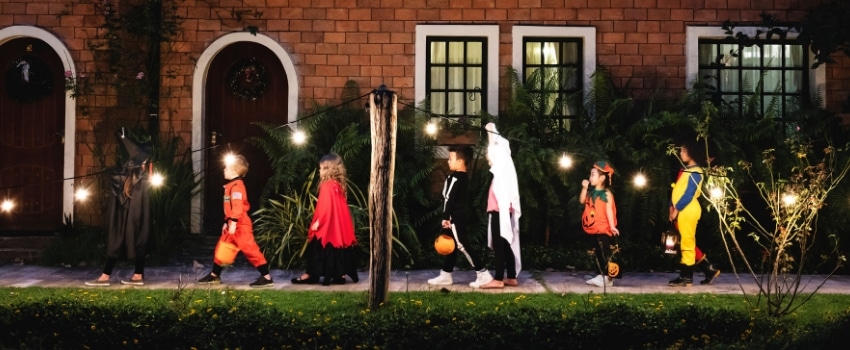
The most important Halloween safety tips for kids begin with visibility and supervision.
Many children are uncomfortable in the dark. For children with autism, low lighting can heighten anxiety. Parents should consider:
Carrying flashlights with spare batteries
Using glow sticks or LED necklaces
Wearing reflective tape on costumes
Choosing light-up sneakers
Ensuring costumes are flame-resistant
The American Academy of Pediatrics (AAP, 2023) recommends reflective materials and adult supervision for younger children to prevent pedestrian injuries.
Additional visibility strategies:
Avoid masks that obstruct vision; use face paint instead.
Ensure costumes are short enough to prevent tripping.
Stick to well-lit neighborhoods and sidewalks.
These simple yet effective Halloween safety tips for kids significantly reduce preventable risks.
Strategy and Structure: Preparing Children with Autism
Routine and predictability are especially important for children on the autism spectrum. Many behavioral studies confirm that structured preparation reduces anxiety and behavioral challenges (Wong et al., 2015).
One of the most effective Halloween safety tips for kids with autism is to create a predictable plan.
Create a Trick or Treat Route Map
Work with your child to:
Select specific houses to visit
Map the walking route
Practice crossing streets safely
Identify safe stopping points
Allow your child to cross off houses as they visit them. This visual reinforcement supports executive functioning and reduces uncertainty.
Practice the Route During the Day
Walking the planned route in daylight increases familiarity. Rehearsal supports comfort and reduces anxiety on the actual evening.
Practice the Trick or Treat Sequence
Break the activity into clear steps:
Walk to the house.
Knock or ring the doorbell.
Say “Trick or treat.”
Hold out the candy bag.
Say “Thank you.”
Walk to the next house.
Repetition builds confidence and social readiness.
These structured approaches are essential Halloween safety tips for kids with developmental differences.
Top 10 Halloween Safety Tips for Kids
Below are the most practical and evidence-informed Halloween safety tips for kids, adapted for families with neurodivergent children.
1. Keep the Evening Routine as Normal as Possible
Maintaining bedtime rituals reduces behavioral disruptions. Start trick or treating early so the rest of the night feels familiar.
2. Choose Comfortable, Non-Scary Costumes
Avoid itchy fabrics or tight accessories. Sensory discomfort can quickly escalate stress.
3. Ensure Visibility at All Times
Use glow accessories and reflective tape. Visibility is one of the most important Halloween safety tips for kids to prevent accidents.
4. Add Identification in Case of Emergency
Options include:
Writing your phone number on your child’s arm with washable marker
Using a medical ID bracelet
Placing a contact card in their candy bag
This precaution aligns with child safety recommendations from the National Safety Council (NSC, 2023).
5. Create and Use a Neighborhood Map
Visual supports reduce unpredictability and help children transition smoothly between houses.
6. Rehearse Social Interactions
Role-play greetings and responses. Practice builds social fluency and reduces anxiety.
7. Read Halloween-Themed Books in Advance
Reading helps children visualize expectations and associate Halloween with positive experiences.
8. Pack a Small Safety Kit
Bring:
First aid kit
Water
Safe snacks
Noise-canceling headphones
Bug spray
Extra batteries
Preparedness is one of the most overlooked Halloween safety tips for kids.
9. Inspect Candy Before Eating
The FDA (2022) advises parents to examine treats for choking hazards or allergens. Discard unwrapped or suspicious items.
10. Respect Your Child’s Limits
If your child can only manage a few houses, celebrate that success. Ending on a positive note reinforces confidence.
Sensory-Friendly Halloween Safety Tips for Kids
Children with autism often experience sensory sensitivities. Loud noises, bright lights, and crowded sidewalks can be overwhelming.
Consider these sensory-based Halloween safety tips for kids:
Visit quieter neighborhoods
Go trick or treating earlier in the evening
Choose soft costumes without tags
Use headphones for noise reduction
Avoid strobe lights or animatronics
Some communities now host “Trunk-or-Treat” events or sensory-friendly Halloween hours, which may provide a calmer alternative.
Emotional Regulation and Positive Reinforcement
Halloween can trigger emotional dysregulation due to overstimulation.
Use these supportive Halloween safety tips for kids:
Use visual schedules
Offer frequent praise
Take movement breaks
Provide clear transition warnings
Offer small rewards for completed steps
Positive reinforcement strategies are evidence-based interventions for children with autism (Wong et al., 2015).
At Thrive Behavior Centers, we encourage parents to focus on progress, not perfection.
When Trick or Treating Isn’t the Best Option
If outdoor trick or treating feels overwhelming, alternatives still allow participation:
Hand out candy at home
Practice pretend trick or treating indoors
Attend a small family gathering
Organize a backyard candy hunt
These adaptations still honor the spirit of Halloween while prioritizing safety.
Flexible planning is one of the most compassionate Halloween safety tips for kids families can follow.
Community Safety Reminders for All Families
Beyond autism-specific strategies, general community-focused Halloween safety tips for kids include:
Always accompany young children
Use crosswalks and obey traffic signals
Avoid distracted walking (no phone use while crossing)
Stay on sidewalks
Avoid entering unfamiliar homes
Carry a charged phone
Drivers should also be reminded to slow down and watch carefully for pedestrians.
Ending the Night on a Positive Note
One of the most important Halloween safety tips for kids is to end the experience before stress escalates.
Celebrate successes, even small ones. Offer praise like:
“You knocked on three doors, that was amazing!”
“You said thank you every time!”
“You handled the noise so well.”
Positive reinforcement strengthens confidence and builds tolerance for future social experiences.
If your child becomes overwhelmed, calmly return home and provide reassurance. The goal is a safe, positive memory, not perfection.
How Thrive Behavior Centers Supports Families
At Thrive Behavior Centers, we understand that holidays can be both exciting and stressful for families of children with autism and developmental delays.
Our team supports children with:
Autism spectrum disorder
Asperger’s
Speech delays
Developmental disabilities
Intellectual disabilities
If you need assistance preparing your child for Halloween or navigating behavioral challenges, our specialists are here to help. Applied Behavior Analysis (ABA) therapy can provide structured tools to support skill-building, emotional regulation, and social readiness.
Final Thoughts on Halloween Safety Tips for Kids
Halloween should be magical—not stressful. With thoughtful preparation, structured planning, and realistic expectations, families can create joyful experiences while maintaining safety.
The most effective Halloween safety tips for kids combine visibility, preparation, flexibility, and positive reinforcement. For children with autism, structured routines and clear expectations make all the difference.
Remember:
Plan ahead.
Practice often.
Prioritize safety.
Celebrate success.
Respect your child’s limits.
From all of us at Thrive Behavior Centers, we wish your family a safe, happy, and confidence-building Halloween.
References
- American Academy of Pediatrics. (2023). Halloween safety tips. https://www.healthychildren.org
- American Psychiatric Association. (2022). Diagnostic and statistical manual of mental disorders (5th ed., text rev.). https://www.psychiatry.org
- Centers for Disease Control and Prevention. (2022). Pedestrian safety. https://www.cdc.gov/transportationsafety/pedestrian_safety
- Food and Drug Administration. (2022). Halloween safety tips for parents. https://www.fda.gov
- National Safety Council. (2023). Halloween safety. https://www.nsc.org
- Wong, C., Odom, S. L., Hume, K., Cox, A. W., Fettig, A., Kucharczyk, S., … Schultz, T. R. (2015). Evidence-based practices for children, youth, and young adults with autism spectrum disorder. Journal of Autism and Developmental Disorders, 45(7), 1951–1966. https://doi.org/10.1007/s10803-014-2351-z