7 Powerful Autism Sensory Toys for Summer Therapy
Autism Sensory Toys for Summer Therapy and Play
Summer offers children a much-needed break from structured school routines, but for children on the spectrum, consistency and purposeful engagement remain essential. Autism sensory toys play a critical role in helping children maintain therapeutic progress while enjoying meaningful and fun summer activities. For families balancing therapy schedules and free time, selecting the right toys can support development without sacrificing joy.
At Thrive Behavior Centers, we emphasize that therapy does not stop when summer begins. Instead, summer provides opportunities to reinforce skills in more natural, play-based environments. Through intentional use of autism sensory toys, children can strengthen physical, social, emotional, and cognitive abilities while feeling relaxed and motivated.
Play is essential for all children, but it is especially important for children with autism spectrum disorder (ASD). Many children with ASD spend 30–40 hours per week in structured therapy programs. During summer, sensory-based play provides a refreshing and therapeutic alternative that still promotes development.
Research confirms that sensory-integrated play improves motor coordination, attention, and adaptive behavior in children with autism (Schaaf et al., 2014). Carefully selected autism sensory toys can transform outdoor and indoor spaces into therapeutic environments.
Why Autism Sensory Toys Are Essential During Summer
Children with autism often experience sensory processing differences. Some may seek intense sensory input, while others may avoid certain stimuli such as loud sounds, bright lights, or rough textures. Autism sensory toys are specifically designed to provide structured sensory input that supports regulation and learning.
Summer play offers unique advantages:
Increased opportunity for gross motor development
Exposure to natural sensory input (sunlight, sand, water, grass)
Social interaction in less formal environments
Improvement in cardiovascular endurance
Enhanced vitamin D production through sunlight exposure
Outdoor physical activity has been shown to improve executive functioning, mood, and social skills in children with developmental differences (Fjørtoft, 2004). By incorporating autism sensory toys into outdoor play, families can amplify these benefits.
Additionally, many children with autism experience vitamin D deficiencies, which may impact immune health and mood regulation (Cannell, 2008). Outdoor sensory activities help address this naturally.
How Autism Sensory Toys Support Physical Development
Physical activity is often challenging for children with ASD due to motor planning difficulties, low muscle tone, or coordination challenges. The right autism sensory toys can gently encourage movement while providing the proprioceptive and vestibular input many children need.
Outdoor running, jumping, swinging, and climbing can:
Improve muscle strength
Increase balance and coordination
Enhance body awareness
Develop endurance
Support bilateral coordination
Vestibular stimulation, such as swinging or spinning, is particularly beneficial for sensory regulation (Ayres, 2005). That is why swings are among the most recommended autism sensory toys for both indoor and outdoor use.
At Thrive Behavior Centers, therapists frequently integrate sensory-based movement activities into treatment plans to reinforce motor and behavioral goals.
7 Powerful Autism Sensory Toys for Summer Therapy
Below are seven highly effective autism sensory toys that combine fun with developmental support.
1. Zip Ball Game for Social and Motor Skills
The Zip Ball Game is a fast-paced toy where two players send an 8-inch plastic football back and forth using string tension. This toy promotes:
Hand-eye coordination
Bilateral movement
Turn-taking
Social interaction
Upper body strength
Because it requires two players, it naturally builds communication and cooperative play skills. As one of the most engaging autism sensory toys, it supports peer interaction in a structured yet enjoyable way.
2. Double Swung Package for Shared Vestibular Input
Swinging provides calming vestibular input, which helps many children regulate their nervous systems. A Double Swung Package allows a child and caregiver or sibling to swing side by side.
Benefits include:
Improved bonding
Reduced anxiety
Sensory regulation
Core muscle strengthening
Increased trust and social comfort
Swinging is frequently used in occupational therapy settings, making it one of the most clinically supported autism sensory toys available.
3. Hammock Chair Stand for Deep Pressure Relaxation
After intense physical play, children may need calming sensory input. A hammock chair provides:
Deep pressure stimulation
Gentle vestibular movement
A safe retreat space
Emotional regulation support
Deep pressure has been shown to reduce anxiety and increase calm behavior in children with autism (Grandin, 1992). As part of a balanced summer routine, calming autism sensory toys like hammock chairs are essential.
4. Sand & Water Toys for Tactile Exploration
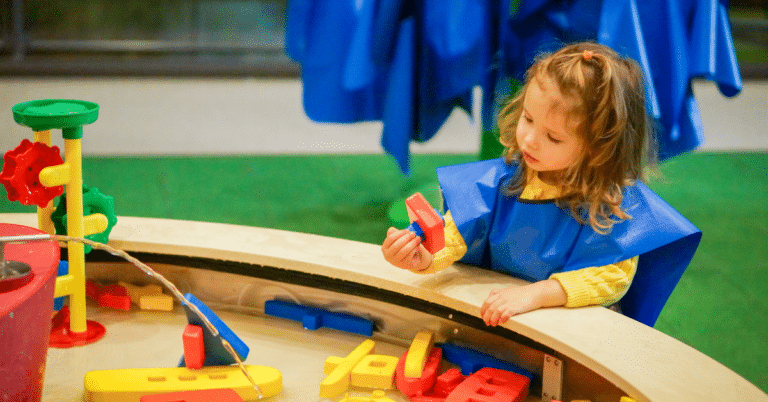
The beach and backyard water tables provide rich sensory experiences. Sand and water toys offer:
Tactile stimulation
Fine motor skill development
Creativity and imaginative play
Sensory desensitization
Children can explore buckets, molds, toy boats, watering cans, and trucks. Sensory bins and water play are widely used in ABA and occupational therapy because they help children tolerate and process different textures safely.
Among all autism sensory toys, tactile play tools are some of the most versatile and affordable options.
5. Deluxe Indoor Single Swing Package
In hot climates like Houston, outdoor play may not always be practical. Indoor swings replicate outdoor sensory input without weather challenges.
Benefits include:
Year-round sensory regulation
Improved posture
Safe indoor movement
Reduced heat sensitivity concerns
For families seeking consistent therapy reinforcement, indoor swings are highly effective autism sensory toys that fit easily into home routines.
6. Gorilla Gym Indoor Play System
The Gorilla Gym attaches to a door frame and transforms indoor spaces into mini sensory gyms.
Features include:
Rings
Ladders
Swings
Climbing options
This system supports:
Upper body strength
Motor planning
Confidence building
Risk assessment skills
Climbing and hanging provide strong proprioceptive input, which is especially helpful for children who seek sensory feedback. As multifunctional autism sensory toys, indoor gym systems maximize developmental impact.
7. Outdoor Obstacle Course Kits
Obstacle courses combine movement, sequencing, and problem-solving. They can include cones, balance beams, stepping stones, and tunnels.
These types of autism sensory toys improve:
Executive functioning
Task completion
Gross motor coordination
Social collaboration
Obstacle play is often incorporated into ABA sessions at Thrive Behavior Centers to encourage goal-directed movement and positive reinforcement learning.
Mental Health Benefits of Autism Sensory Toys
Beyond physical gains, autism sensory toys provide powerful mental health benefits.
Children who experience success during play are more likely to:
Build self-esteem
Develop resilience
Improve emotional regulation
Engage socially
Reduce repetitive behaviors
Outdoor sensory play has been associated with reduced stress and improved mood (Tillmann et al., 2018). Structured play environments allow children to practice coping skills in low-pressure settings.
At Thrive Behavior Centers, therapists encourage families to integrate therapeutic toys into daily life, reinforcing coping strategies learned in sessions.
Social Benefits of Autism Sensory Toys
Many children with autism struggle with social communication. Toys that require shared interaction create natural teaching moments.
For example:
Turn-taking games teach patience
Swinging with a partner builds trust
Group obstacle courses promote teamwork
Water play encourages parallel play
Using autism sensory toys strategically can strengthen peer relationships and reduce social anxiety.
Choosing the Right Autism Sensory Toys
When selecting toys, consider:
Sensory preferences (seeking vs. avoiding)
Motor ability level
Safety requirements
Indoor vs. outdoor environment
Therapeutic goals
Parents should observe how their child responds to different types of sensory input. Thrive Behavior Centers recommends consulting with a BCBA or occupational therapist when building a sensory-friendly play space.
Incorporating Autism Sensory Toys Into ABA Therapy
Applied Behavior Analysis (ABA) therapy focuses on reinforcing positive behaviors and teaching functional skills. Autism sensory toys can enhance ABA sessions by:
Increasing motivation
Serving as reinforcers
Encouraging engagement
Supporting skill generalization
For example, a therapist might use swinging as a reward for completing communication tasks or obstacle courses to reinforce following multi-step instructions.
Research supports natural environment teaching as an effective ABA strategy (National Autism Center, 2015). Sensory-based summer activities align perfectly with this model.
Creating a Sensory-Friendly Summer Routine
A structured routine might include:
Morning outdoor swing time
Midday water table play
Afternoon indoor gym session
Evening hammock relaxation
Consistency helps children feel secure, while autism sensory toys provide therapeutic engagement throughout the day.
Safety Considerations for Autism Sensory Toys
Safety is crucial. Always:
Supervise climbing and swinging
Check weight limits
Secure indoor equipment properly
Monitor sun exposure
Ensure hydration during outdoor play
Proper setup ensures that sensory play remains both fun and therapeutic.
Why Thrive Behavior Centers Recommends Autism Sensory Toys
At Thrive Behavior Centers, we believe therapy should extend beyond clinical settings. Summer presents the perfect opportunity to blend play and progress.
Our clinicians often recommend:
Vestibular toys for regulation
Proprioceptive tools for focus
Tactile activities for desensitization
Cooperative games for social development
By integrating autism sensory toys into daily routines, families can maintain therapeutic gains while creating joyful summer memories.
Long-Term Benefits of Autism Sensory Toys
When used consistently, autism sensory toys can contribute to:
Improved adaptive skills
Enhanced independence
Greater emotional regulation
Stronger social bonds
Increased physical health
Summer play is not just entertainment, it is an extension of therapy.
Children who enjoy sensory-informed play often demonstrate improved classroom behavior and stronger therapy outcomes when the school year resumes.
Conclusion: Making Summer Meaningful with Autism Sensory Toys
Summer should be a time of freedom and growth for every child. For children on the spectrum, the right autism sensory toys can transform ordinary play into powerful therapeutic experiences.
From swings and obstacle courses to sand toys and hammock chairs, these tools support physical, mental, and social development. With guidance from professionals at Thrive Behavior Centers, families can create engaging summer routines that nurture progress while celebrating childhood joy.
Play is not a break from therapy, it is therapy in motion.
If you need help with anything, please do not hesitate to contact us.
References
- Ayres, A. J. (2005). Sensory integration and the child. Western Psychological Services.
- Cannell, J. J. (2008). Autism and vitamin D. Medical Hypotheses, 70(4), 750–759. https://doi.org/10.1016/j.mehy.2007.08.016
- Fjørtoft, I. (2004). Landscape as playscape: The effects of natural environments on children’s play and motor development. Children, Youth and Environments, 14(2), 21–44. https://www.jstor.org/stable/10.7721/chilyoutenvi.14.2.0021
- Grandin, T. (1992). Calming effects of deep touch pressure in patients with autistic disorder. Journal of Child and Adolescent Psychopharmacology, 2(1), 63–72. https://doi.org/10.1089/cap.1992.2.63
- National Autism Center. (2015). National standards project, phase 2. https://www.nationalautismcenter.org
- Schaaf, R. C., Benevides, T., Mailloux, Z., et al. (2014). An intervention for sensory difficulties in children with autism: A randomized trial. Journal of Autism and Developmental Disorders, 44, 1493–1506. https://doi.org/10.1007/s10803-013-1983-8
- Tillmann, S., Tobin, D., Avison, W., & Gilliland, J. (2018). Mental health benefits of interactions with nature in children and teenagers. International Journal of Environmental Research and Public Health, 15(12), 2667. https://doi.org/10.3390/ijerph15122667