
7 Powerful Ways Our ABA Therapy Program Supports Families
ABA Therapy Program at Thrive Behavior Center: Empowering Children and Families to Thrive
Raising a child with autism spectrum disorder (ASD) is a journey filled with learning, growth, and resilience. Every milestone, big or small, represents dedication from both the child and their family. At Thrive Behavior Center, we understand that no family should walk this path alone. That is why our ABA Therapy is designed to provide comprehensive, compassionate, and evidence-based support for children with autism while empowering parents and caregivers every step of the way.
Our mission is simple: help children build meaningful skills, reduce challenging behaviors, and improve overall quality of life through a personalized ABA Therapy Program that meets each child exactly where they are.
What Is an ABA Therapy Program?
An ABA Therapy is a structured, evidence-based approach rooted in Applied Behavior Analysis (ABA), a science that studies how behavior is learned and how it can be improved. ABA therapy focuses on understanding why behaviors occur and using positive reinforcement strategies to teach new skills and encourage meaningful behavior change.
At Thrive Behavior Center, our ABA Therapy Program is not a one-size-fits-all solution. Instead, it is carefully tailored to support each child’s unique strengths, challenges, developmental level, and family goals. Through consistent assessment, data collection, and collaboration, we ensure therapy remains effective, ethical, and child-centered.
Why Choose an ABA Therapy Program for Autism?
ABA therapy is widely recognized as one of the most effective interventions for children with autism. Research consistently shows that early and consistent participation in an ABA Therapy Program can lead to improvements in:
- Communication and language skills
- Social interaction and play
- Attention and focus
- Daily living and self-care skills
- Emotional regulation
- Reduction of challenging behaviors
More importantly, a high-quality ABA Therapy supports long-term independence and helps children generalize skills across environments such as home, school, and the community.

ABA Therapy Program at Thrive Behavior Center: Our Philosophy
At Thrive Behavior Center, we believe therapy should feel supportive, respectful, and empowering, not overwhelming. Our ABA Therapy Program is built on three core principles:
- Individualization – Every child’s plan is uniquely designed.
- Family Collaboration – Parents and caregivers are active partners.
- Data-Driven Decision Making, Progress guides every adjustment.
By combining clinical expertise with compassion, our ABA Therapy Program supports not just children, but entire families.
Empowering Families Through Our ABA Therapy
Family Collaboration as the Foundation
Parents are a child’s first and most influential teachers. That’s why family involvement is a cornerstone of our ABA Therapy. From the very beginning, caregivers are included in goal setting, progress reviews, and treatment planning.
Our Board Certified Behavior Analysts (BCBAs) work closely with families to:
- Explain therapy goals in clear, practical terms
- Demonstrate strategies used during sessions
- Provide hands-on guidance for use at home
- Answer questions and address concerns openly
This collaborative approach ensures that skills taught through the ABA Therapy Program continue beyond therapy sessions and become part of everyday life.
Parent Training Within the ABA Therapy Program
Parent training is a vital component of a successful ABA Therapy. At Thrive Behavior Center, we offer structured parent and caregiver training sessions that build confidence and consistency.
Through these sessions, families learn how to:
- Use positive reinforcement effectively
- Reduce challenging behaviors safely and ethically
- Encourage communication and independence
- Navigate daily routines with less stress
- Support emotional regulation and transitions
By empowering parents, our ABA Therapy Program helps create a stable, supportive environment where children can thrive.
Tailored ABA Therapy for Every Child
No two children with autism are alike. That’s why personalization is at the heart of our ABA Therapy Program. Each child begins with a comprehensive assessment conducted by a BCBA, which evaluates developmental skills, behavior patterns, strengths, and family priorities.
Based on this assessment, we design a customized ABA Therapy Program that evolves as the child grows.
Early Intervention ABA Therapy Program
Early intervention can make a powerful difference in a child’s development. Our early intervention ABA Therapy supports toddlers and preschool-aged children during critical developmental years.
This program focuses on:
- Early communication and language development
- Social engagement and joint attention
- Play skills and imitation
- Reducing early signs of challenging behavior
- Building readiness for school and group settings
By starting an ABA Therapy Program early, children gain foundational skills that support long-term success.
One-on-One ABA Therapy Program
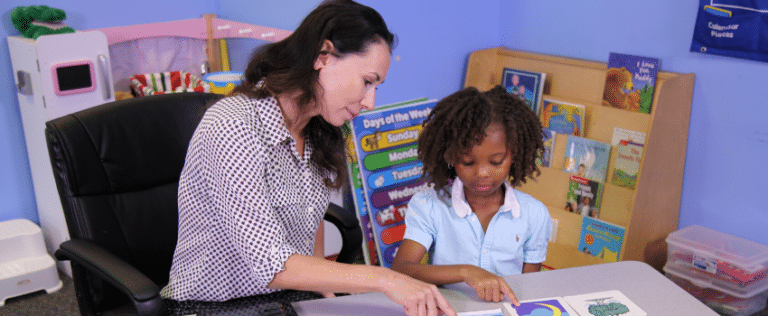
Our one-on-one ABA Therapy Program provides focused, individualized support tailored to specific skill areas. Sessions are led by Registered Behavior Technicians (RBTs) under the supervision of a BCBA.
This intensive format allows for:
- Targeted skill instruction
- Consistent reinforcement
- Close monitoring of progress
- Immediate adjustments to strategies
Whether the focus is communication, behavior reduction, or daily living skills, one-on-one sessions are a powerful component of our ABA Therapy Program.
Social Skills ABA Therapy
Social interaction can be challenging for many children with autism. Our social skills ABA Therapy Program offers small group sessions that provide a supportive environment for practicing real-world social behaviors.
Children learn how to:
- Initiate and maintain conversations
- Take turns and share
- Read social cues and body language
- Build friendships and cooperative play skills
These group-based sessions complement individual therapy and help children generalize skills learned through the ABA Therapy Program.
ABA Therapy Program for Daily Living Skills
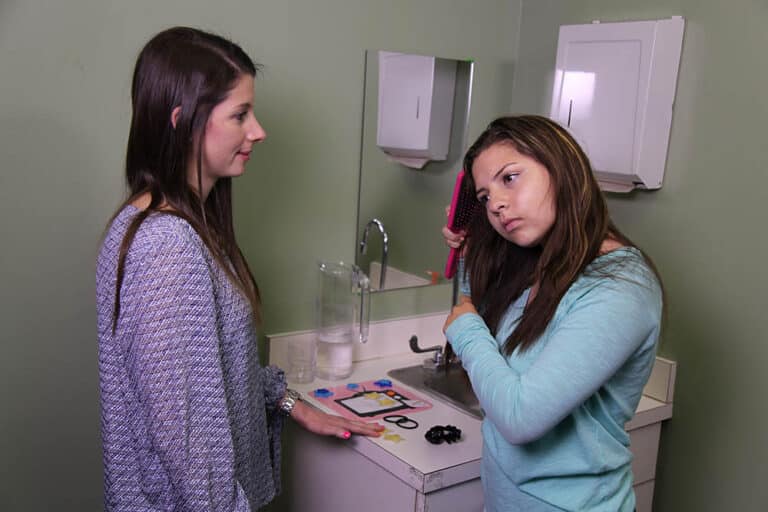
Independence is a key goal of every ABA Therapy. At Thrive Behavior Center, we place a strong emphasis on teaching practical life skills that support autonomy and confidence.
These skills may include:
- Dressing and grooming
- Mealtime routines
- Toilet training
- Following schedules and transitions
- Household responsibilities
Teaching daily living skills through an ABA Therapy Program helps children gain confidence and prepares them for greater independence over time.
School Collaboration in Our ABA Therapy
Consistency across environments is essential for meaningful progress. Our ABA Therapy includes collaboration with schools, teachers, and educational teams whenever possible.
We support school success by:
- Sharing strategies with educators
- Aligning therapy goals with academic objectives
- Supporting behavior plans in the classroom
- Promoting skill generalization
This partnership ensures the ABA Therapy Program supports the child not only at home and in therapy, but also in academic settings.
Creating a Supportive Environment Through an ABA Therapy Program
Thrive Behavior Center is more than a therapy provider, we are a community. Our team of BCBAs and RBTs is dedicated to creating a welcoming, encouraging environment where families feel supported and heard.
Within our ABA Therapy Program, we emphasize:
- Respect for each child’s individuality
- Positive reinforcement and encouragement
- Ethical, evidence-based practices
- Ongoing communication with families
Parents often tell us that the greatest impact of our ABA Therapy Program is not just skill development, but increased confidence, both for their child and for themselves.
Data-Driven Progress in Our ABA Therapy Program
Every aspect of our ABA Therapy is guided by data. Therapists collect detailed information during sessions to track progress, identify patterns, and evaluate effectiveness.
This data allows us to:
- Measure skill acquisition accurately
- Identify areas needing adjustment
- Celebrate meaningful progress
- Ensure therapy goals remain relevant
By using data responsibly, our ABA Therapy Program remains flexible, responsive, and goal-focused.
Long-Term Benefits of an ABA Therapy
Participation in a high-quality ABA Therapy Program can lead to lasting benefits that extend well beyond childhood. These include:
- Increased independence
- Improved communication and relationships
- Greater emotional regulation
- Enhanced academic and social success
- Stronger family dynamics
At Thrive Behavior Center, we focus on building skills that matter, not just in therapy, but in everyday life.
Choosing the Right ABA Therapy Program for Your Family
Selecting an ABA Therapy is an important decision. Families should look for a provider that values transparency, collaboration, and individualized care.
At Thrive Behavior Center, we are proud to offer an ABA Therapy Program that prioritizes:
- Compassionate, experienced clinicians
- Family-centered care
- Personalized treatment plans
- Ethical, evidence-based practices
We are committed to walking alongside families through every stage of their journey.
Thrive Behavior Center: A Partner in Your ABA Therapy Journey
Sources
Autism Speaks. (n.d.). Applied behavior analysis (ABA). Autism Speaks. Retrieved February 10, 2026, from https://www.autismspeaks.org/applied-behavior-analysis
APA: Autism Speaks. (n.d.). Applied behavior analysis (ABA). Retrieved February 10, 2026, from https://www.autismspeaks.org/applied-behavior-analysisABA.com.sa. (n.d.). What is ABA therapy for autism. Retrieved February 10, 2026, from https://aba.com.sa/en/aba-therapy-program/
APA: ABA.com.sa. (n.d.). What is ABA therapy for autism. Retrieved February 10, 2026, from https://aba.com.sa/en/aba-therapy-program/All Star ABA. (n.d.). Unveiling the potential of ABA therapy. Retrieved February 10, 2026, from https://www.allstaraba.org/aba-therapy-programs
APA: All Star ABA. (n.d.). Unveiling the potential of ABA therapy programs. Retrieved February 10, 2026, from https://www.allstaraba.org/aba-therapy-programsNurturing Nests. (n.d.). What does ABA therapy stand for? A guide to applied behavior analysis. Retrieved February 10, 2026, from https://nurturingnests.com/what-does-aba-therapy-stand-for/
APA: Nurturing Nests. (n.d.). What does ABA therapy stand for? A guide to applied behavior analysis. Retrieved February 10, 2026, from https://nurturingnests.com/what-does-aba-therapy-stand-for/Cross River Therapy. (n.d.). ABA therapy for autism therapy support programs. Retrieved February 10, 2026, from https://www.crossrivertherapy.com/articles/aba-therapy-for-autism-therapy-support-programs-26c6f
APA: Cross River Therapy. (n.d.). ABA therapy for autism therapy support programs. Retrieved February 10, 2026, from https://www.crossrivertherapy.com/articles/aba-therapy-for-autism-therapy-support-programs-26c6fDiscovery ABA. (n.d.). ABA therapy for behavioral support programs. Retrieved February 10, 2026, from https://www.discoveryaba.com/aba-therapy/aba-therapy-for-behavioral-support-programs-5184b
APA: Discovery ABA. (n.d.). ABA therapy for behavioral support programs. Retrieved February 10, 2026, from https://www.discoveryaba.com/aba-therapy/aba-therapy-for-behavioral-support-programs-5184bLifeScape. (2023). Applied behavior analysis (ABA) therapy program. LifeScape flyer. Retrieved February 10, 2026, from https://www.lifescapesd.org/wp-content/uploads/2023/09/LifeScape_ABA-Flyer_2022.pdf
APA: LifeScape. (2023). Applied behavior analysis (ABA) therapy program [Flyer]. Retrieved February 10, 2026, from https://www.lifescapesd.org/wp-content/uploads/2023/09/LifeScape_ABA-Flyer_2022.pdf