
7 Powerful Expectations From an ABA Therapy Clinic
What to Expect From an ABA Therapy Clinic
Choosing an ABA therapy clinic for your child is a significant decision. As parents, we naturally want reassurance that the services our children receive are ethical, evidence-based, structured, and effective. Applied Behavior Analysis (ABA) is one of the most widely researched and evidence-based interventions for children with autism spectrum disorder (ASD) (Smith, 2001). However, not all clinics operate the same way.
Understanding what to expect from an ABA therapy clinic helps you advocate for your child, evaluate service quality, and build a strong partnership with providers. At Thrive Behavior Centers, families are encouraged to be informed, engaged, and empowered throughout their child’s therapeutic journey.
Below are the essential expectations every parent should have when working with a clinic.
Daily Communication in an ABA Therapy Clinic
Clear and consistent communication is foundational in any reputable clinic. Parents should expect daily session notes outlining:
Skills targeted
Programs implemented
Behaviors observed
Progress made
Areas needing additional support
Daily notes allow you to stay informed about what your child is learning. According to the Behavior Analyst Certification Board (BACB, 2020), transparency and documentation are ethical requirements in behavioral service delivery.
If yourclinic does not automatically provide session summaries, request them from your BCBA or Clinic Director. Ongoing communication strengthens collaboration and promotes skill generalization across environments.
Observation and Transparency Within an ABA Therapy Clinic
Many modern ABA therapy clinic environments utilize camera systems. While not mandatory, video systems promote transparency and accountability. They allow parents to observe sessions without disrupting instruction.
Research supports parent involvement as a key component of successful ABA outcomes (Odom et al., 2010). Observing your child’s therapy sessions helps you:
Understand intervention strategies
Learn prompting techniques
Reinforce skills at home
Feel confident in service quality
Thrive Behavior Centers maintains an open-door philosophy, ensuring families feel welcome and involved in the ABA therapy clinic process.
Parent Training in an ABA Therapy Clinic
A high-quality ABA therapy clinic prioritizes parent and caregiver training. Parent training should occur at least monthly, though many clinics offer weekly sessions.
Parent training supports skill generalization, the ability for a child to demonstrate learned skills across settings such as home, school, and community (Stokes & Baer, 1977). Without generalization, progress may remain limited to the clinic setting.
Training sessions within a clinic may address:
Managing challenging behaviors
Teaching communication skills
Preparing for medical appointments
Increasing tolerance for haircuts or dental exams
Preventing elopement in public spaces
Developing self-care routines
Initially, training may occur inside the clinic, then expand into home or community environments as needed.
Progress Reports From an ABA Therapy Clinic
Families should receive formal progress updates at least quarterly from their clinic. These reports typically include:
Data summaries
Goal mastery status
Behavior reduction progress
Skill acquisition updates
Treatment plan modifications
Data-driven decision-making is central to ABA practice (Cooper, Heron, & Heward, 2020). A responsible ABA therapy clinic uses objective data, not opinions, to evaluate effectiveness.
Regular reporting ensures accountability and provides documentation for insurance authorization renewals.
Ongoing Assessments in an ABA Therapy Clinic
Standardized assessments should be conducted every six months or as required by funding sources. A professional clinic commonly utilizes tools such as:
VB-MAPP (Verbal Behavior Milestones Assessment and Placement Program)
ABLLS-R (Assessment of Basic Language and Learning Skills–Revised)
These assessments identify developmental gaps and guide program adjustments. Periodic reassessment ensures your child’s ABA therapy clinic program evolves with their growth.
Insurance providers often require updated evaluations before approving continued services.
Insurance Support From a Clinic
A reputable ABA therapy clinic assists families in navigating insurance processes. At intake, clinics should verify benefits and clearly explain:
In-network or out-of-network status
Deductibles
Co-pays
Coinsurance percentages
Out-of-pocket maximums
The ABA therapy clinic should submit authorization requests for assessments and ongoing treatment. Authorizations typically last six months.
If claims are denied, your ABA therapy clinic should assist with appeals whenever possible. Insurance advocacy is part of quality service delivery.
Accountability and Safety in a Clinic
Safety protocols are non-negotiable in any ABA therapy clinic. Expect structured procedures such as:
Body Checks
Clinics should conduct body checks upon arrival and departure. These quick visual scans document pre-existing marks (scratches, bruises, rashes) to ensure transparency and protection for both families and staff.
Incident Reports
If an injury occurs inside the ABA therapy clinic, staff must complete a formal incident report detailing:
Time and location
Description of event
Treatment provided
Preventative measures
Staff signatures
Parent acknowledgment
Incident documentation aligns with professional accountability standards (BACB, 2020).
Crisis Management in a Clinic
Some children engage in behaviors that require structured crisis intervention. Many ABA therapy clinic teams are trained in crisis management programs such as:
Safety-Care
CPI (Crisis Prevention Institute)
MANDT
PCM
SAMA
These programs emphasize prevention, de-escalation, and safety. Physical management strategies are used only when necessary to prevent harm.
A responsible ABA therapy clinic prioritizes proactive behavior plans over reactive responses.
Emergency Preparedness in an ABA Therapy Clinic
Your ABA therapy clinic should maintain documented emergency procedures covering:
Fire evacuation
Severe weather
Lockdown/intruder response
Medical emergencies
Staff should maintain CPR and Basic Life Support certification. Preparedness ensures your child’s safety in unexpected situations.
Credentialing and Continuing Education in an ABA Therapy Clinic
Board Certified Behavior Analysts (BCBAs) must complete continuing education units (CEUs) to maintain certification. Registered Behavior Technicians (RBTs) renew credentials annually.
The BACB Ethical Code (2020) requires professionals within every ABA therapy clinic to operate within their scope of competence and pursue ongoing professional development.
Ask your clinic about staff credentials and supervision structures.
Individualized Programming in a Clinic
Every child’s treatment plan inside an ABA therapy clinic should be individualized. ABA is not a one-size-fits-all model.
Your BCBA should collaborate with you to develop goals aligned with family priorities. Research supports individualized intervention as critical to meaningful progress (National Autism Center, 2015).
Programs in a clinic typically address:
Communication skills
Social interaction
Play skills
Adaptive living skills
Behavior reduction
School readiness
Treatment plans should remain fluid and responsive to data.
BCBA Supervision Within a Clinic
A BCBA should directly supervise approximately 10% or more of therapy hours. For example, if a child receives 30 hours per week, the BCBA should provide at least 3 hours of supervision.
During supervision in the ABA therapy clinic, BCBAs:
Review data
Modify programs
Model procedures
Provide technician feedback
Conduct parent meetings
Regular supervision ensures treatment integrity.
Technician Training in a Clinic
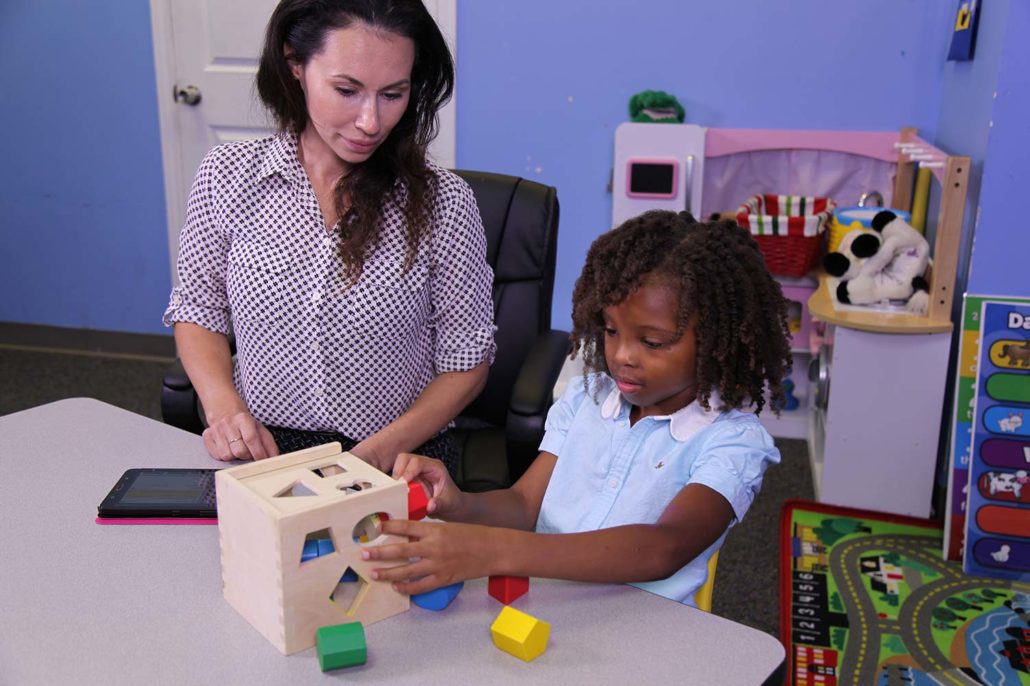
Behavior technicians are the frontline providers in an ABA therapy clinic. They should receive structured training before working independently.
Many clinics use Behavior Skills Training (BST), which includes:
Instruction
Modeling
Rehearsal
Feedback
Research confirms BST as an effective training method (Parsons, Rollyson, & Reid, 2012).
Technicians in a professional clinic should demonstrate competency before independent sessions.
Ongoing Technician Evaluation in a Clinic
Quality assurance requires routine performance evaluations. A structured clinic should evaluate technicians at least monthly.
Evaluations may include:
Fidelity checks
Data accuracy review
Direct observation
Performance feedback
Consistent monitoring protects treatment quality and client progress.
Ethical Standards in an ABA Therapy Clinic
All professionals working in an ABA therapy clinic must adhere to the BACB Ethics Code (2020). Ethical responsibilities include:
Avoiding dual relationships
Declining gifts
Maintaining confidentiality
Avoiding conflicts of interest
Practicing within competency
Ethics safeguard families and preserve the integrity of the field.
Collaboration Between Families and an ABA Therapy Clinic
An effective ABA therapy clinic values family input. Parents are not passive observers, they are partners.
Research highlights family involvement as a major predictor of long-term outcomes (Brookman-Frazee, 2004). Thrive Behavior Centers emphasizes collaborative goal-setting and welcomes feedback.
Continuous Improvement in an ABA Therapy Clinic
The field of ABA continues to evolve. A high-quality ABA therapy clinic embraces:
Data-based refinements
Evidence-based practices
Ongoing staff education
Parent satisfaction surveys
Continuous improvement ensures your child receives modern, ethical, and effective treatment.
Final Thoughts on Choosing an ABA Therapy Clinic
Selecting an ABA therapy clinic can feel overwhelming. However, knowing what to expect empowers you to make informed decisions.
At Thrive Behavior Centers, families can expect:
Transparency
Professionalism
Safety
Evidence-based practice
Compassionate care
Your child deserves services that promote independence, communication, and confidence. A well-structured ABA therapy clinic should meet the expectations outlined above, not occasionally, but consistently.
When evaluating providers, ask questions. Observe sessions. Review data. Request training. Strong partnerships between families and an ABA therapy clinic create the foundation for meaningful progress. To keep the progress going, we are here to help.
References
- Behavior Analyst Certification Board. (2020). Ethics code for behavior analysts. https://www.bacb.com/ethics-information/
- Brookman-Frazee, L. (2004). Using parent/clinician partnerships in parent education programs for children with autism. Journal of Positive Behavior Interventions, 6(4), 195–213. https://doi.org/10.1177/10983007040060040201
- Cooper, J. O., Heron, T. E., & Heward, W. L. (2020). Applied behavior analysis (3rd ed.). Pearson.
- National Autism Center. (2015). National standards project, phase 2. https://www.nationalautismcenter.org/national-standards-project/
- Odom, S. L., Collet-Klingenberg, L., Rogers, S. J., & Hatton, D. (2010). Evidence-based practices in interventions for children with autism spectrum disorders. Preventing School Failure, 54(4), 275–282. https://doi.org/10.1080/10459881003785506
- Parsons, M. B., Rollyson, J. H., & Reid, D. H. (2012). Evidence-based staff training. Behavior Analysis in Practice, 5(2), 2–13. https://doi.org/10.1007/BF03391819
- Smith, T. (2001). Discrete trial training in the treatment of autism. Focus on Autism and Other Developmental Disabilities, 16(2), 86–92. https://doi.org/10.1177/108835760101600204